Mamun M. Aziz
Through global statistics and contemporary policy insights, it can be theoretically demonstrated that my current residence—Brisbane, the third-largest city in Australia—is not only well-developed but also highly eco-friendly and rich in biodiversity. In the EIU’s World’s Most Liveable Cities 2025 index, among 173 cities, almost all major Australian cities ranked within the top 20, with Brisbane placed 17th. In contrast, my beloved home city, Dhaka, stands at 171st.
Dhaka remains my dearest city, but this unambiguous difference in the liveability index is both painful and instructive. It helps us understand the core evaluation criteria that determine a city’s liveability—stability, healthcare, culture and environment, education, and infrastructure.
Simply put, the Liveability Index measures human habitability. Yet, a deeper look reveals that each criterion—environment, education, and culture—reflects a commitment to sustainability. The top-ranked cities are not just technologically advanced or urbanized; they also ensure biodiversity and environmental balance. After all, no place can truly be “most liveable” if only humans can thrive there.
A few years ago, when I was moving from Bangladesh to Brisbane, my little daughter accidentally left a small piece of banana in a handbag. At Brisbane Airport, it was detected during scanning, and under the Environment Protection and Biodiversity Conservation Act 1999 (EPBC Act), we were fined over AUD 1,400. Despite sending two apology and review letters, the fine was not waived.
This federal rule prohibits bringing any raw food, fruit, seed, or plant from abroad, ensuring that no foreign organism or bacteria can disturb Australia’s unique biodiversity.
Australia consistently ranks among the top 10 countries in the Global Biodiversity Index. About 87% of its mammals, 93% of its reptiles and amphibians, 84% of its plants, and 45% of its birds are endemic—found nowhere else on Earth. The state of Queensland is the most biodiverse in Australia, home to rainforests, savannas, and the world-famous Great Barrier Reef. Brisbane, the capital of Queensland, has been a leader in sustainability for over two decades and is recognized as Australia’s greenest and most biodiverse capital city.
The first Monday of October marks World Habitat Day, a UN initiative reminding us that Earth is home not only to humans but to all species and ecosystems. The 2025 theme, 'Urban Crisis Responses', urges cities to prepare, adapt, and thrive amid environmental and social challenges.
Queensland exemplifies this vision through its ShapingSEQ Regional Plan and Queensland Housing and Homelessness Action Plan, both based on the principle of coexistence between humans and nature. Every new residential development reserves land for greenery, wetlands, and open fields—reducing urban heat, improving air quality, and enhancing mental well-being. Importantly, existing creeks are preserved, supporting natural rainwater flow and providing habitats for diverse wildlife.
Australia’s coastal regions were once covered in dense forests. Urbanization progressed by clearing forested areas—but with a strong commitment to preserving essential wildlife habitats. Take Queensland as an example: it’s home to around 120 snake species, including 78 venomous ones. Remarkably, five species of venomous snakes are commonly seen even in Brisbane’s suburban neighborhoods. Yet in 2024, only one fatality was recorded due to snakebite in Queensland. Under the Nature Conservation Act 1992, killing snakes is strictly prohibited. This reflects Australia’s dedication to peaceful human-wildlife coexistence.
Every development project in Queensland requires an Environmental Impact Assessment (EIA). The state also enforces the Green Star Rating System, guided by the Green Building Council of Australia (GBCA), which assesses energy efficiency, water use, materials, and indoor environmental quality—guiding developers toward climate-ready and low-carbon outcomes.
New housing projects are required to include solar rooftops, supported by federal rebates through the Small-scale Renewable Energy Scheme (SRES) and the Cheaper Home Batteries Program, which offers up to 30% off battery installation costs. Homeowners can also sell excess solar power back to the grid through feed-in tariffs. Rainwater harvesting systems and greywater recycling units are commonly installed. Locally sourced and recycled materials—such as natural timber, repurposed bricks, and concrete—are used to regulate indoor temperature and reduce carbon emissions.
Being a coastal state prone to cyclones and floods, Queensland has launched the Resilient Homes Fund and QCoast2100 Program. These initiatives relocate older homes to higher ground and mandate flood-resilient designs for new constructions, ensuring minimal damage during extreme weather events.
Through the Greener Suburbs Program and Community Sustainability Action Grants, citizens actively participate in tree planting, waste segregation, and adopting a plastic-free lifestyle.
Schools across Queensland are integrating sustainability into everyday learning through the EcoMarines Foundation and the Sustainable Schools Strategy. Programs like the School Environmental Management Plan (SEMP) and outdoor education centers teach students that building a sustainable city is a shared responsibility. Children learn that simple acts—such as planting trees, saving water, and reusing materials—can help build a greener future.
Queensland’s eco-friendly policies benefit not only nature but also the economy. The green economy—including solar energy, eco-tourism, recycling industries, and sustainable construction—has created thousands of jobs across the state. Under the Clean Economy Jobs Act 2024, Queensland aims to reduce emissions by 75% by 2035 and reach net-zero by 2050. According to Deloitte Access Economics, the state could unlock up to AUD 430 billion in economic opportunity by embracing a low-emissions future—proving that growth and sustainability can go hand in hand.
The message of World Habitat Day is clear: our homes should reflect the planet we live on. Brisbane and the wider Queensland model offer a powerful example of how this can be achieved—through proactive planning, resilient design, and community participation.
Brisbane’s green vision proves that modernity does not mean a jungle of concrete, but a thoughtful, balanced coexistence of nature, wildlife, and humanity. Its example can guide other cities and nations toward sustainable urban futures—where development, environment, and compassion move forward together.
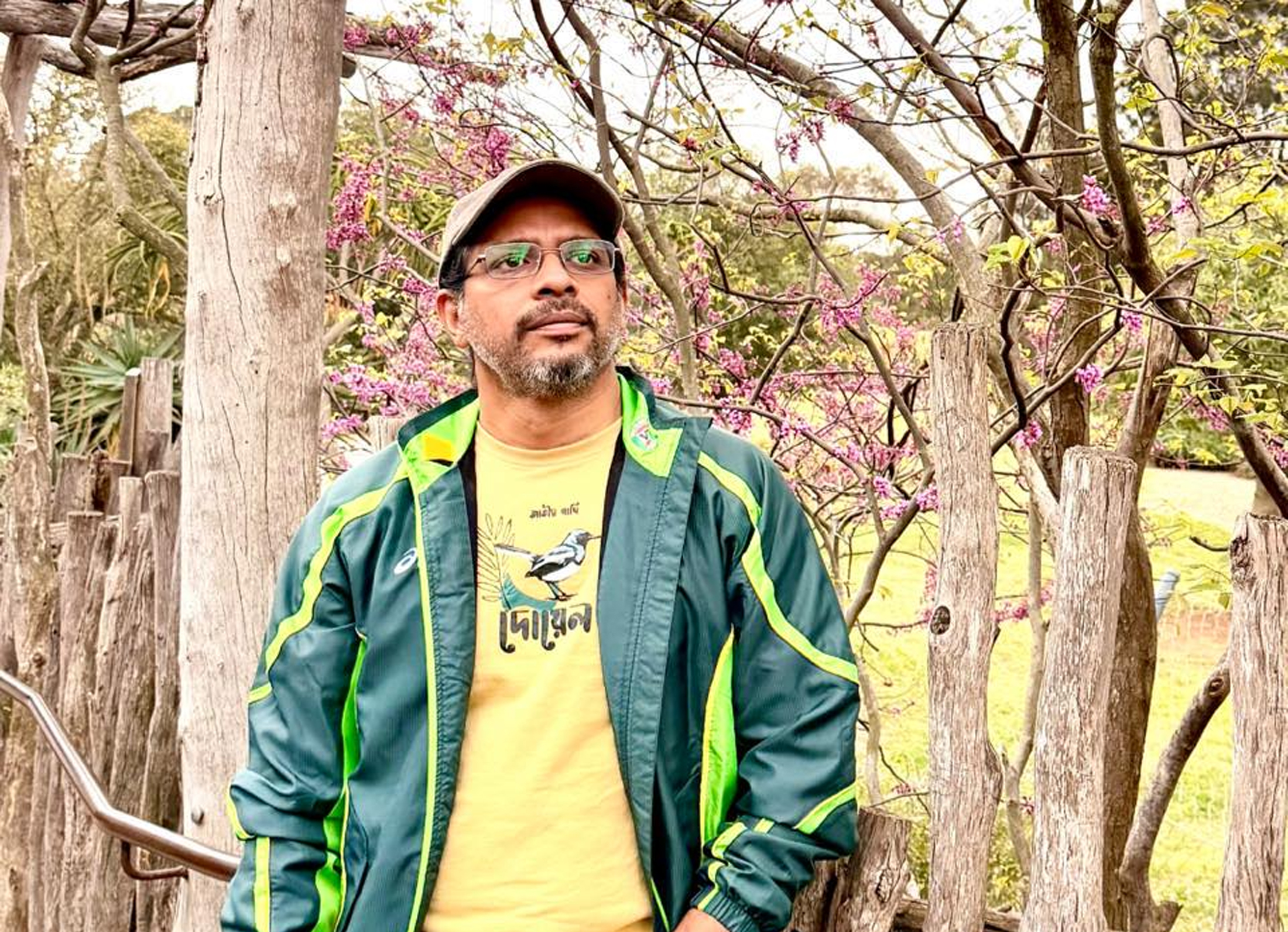
[Mamun M. Aziz, a Bangladeshi writer and EEE graduate once active in social causes online, served nine years in the Telecom Cadre before migrating to Australia, where he continues his career in the telecom sector.]