Jackfruit Post Feature
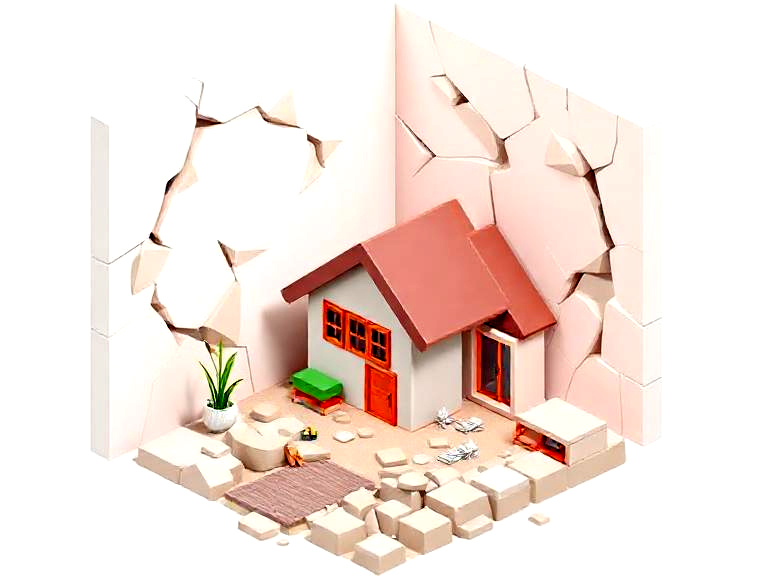
According to the Millennium Residence blog, wall cracks generally fall into four clear types. Hairline cracks are the tiny, harmless lines that come from normal settling. Vertical cracks are usually safe if they stay narrow, but widening ones deserve attention. Horizontal cracks, however, are the real red flags—often hinting at foundation pressure. And diagonal cracks, especially around windows and doors, can signal shifting that shouldn’t be ignored if they start to widen.

The 5 Millimeter Alert When Walls Start to Speak
There’s one warning sign you should never ignore: the 5-millimeter rule—about the width of a pencil eraser. Any crack wider than this, especially if it runs unbroken across walls or ceilings, deserves immediate attention. And if it’s paired with subtle clues—doors that suddenly stick, windows that won’t close smoothly—it may signal that your building is under real structural strain. When these signs appear together, don’t wait. Step outside, stay safe, and call a structural engineer right away.
Preventing Cracks with Modern Tech
Modern tech doesn’t just patch cracks—it helps homes withstand quakes with minimal damage.
- Flexibility Over Rigidity: Buildings that can bend a little survive earthquakes better than stiff ones.
- Seismic Retrofitting: Upgrading existing walls and foundations to absorb shocks before damage happens.
- Base Isolation for High-Rises: Giant “shock absorbers” let the building glide while the earth shakes.
- Smart Materials: Carbon fiber strips reinforce walls instantly. Earthquake-resistant coatings make masonry more flexible and durable.

How Homes Recover from Cracks and Shakes

With the right assessment and repairs, even seriously cracked homes can be fully restored—and often stronger than before.