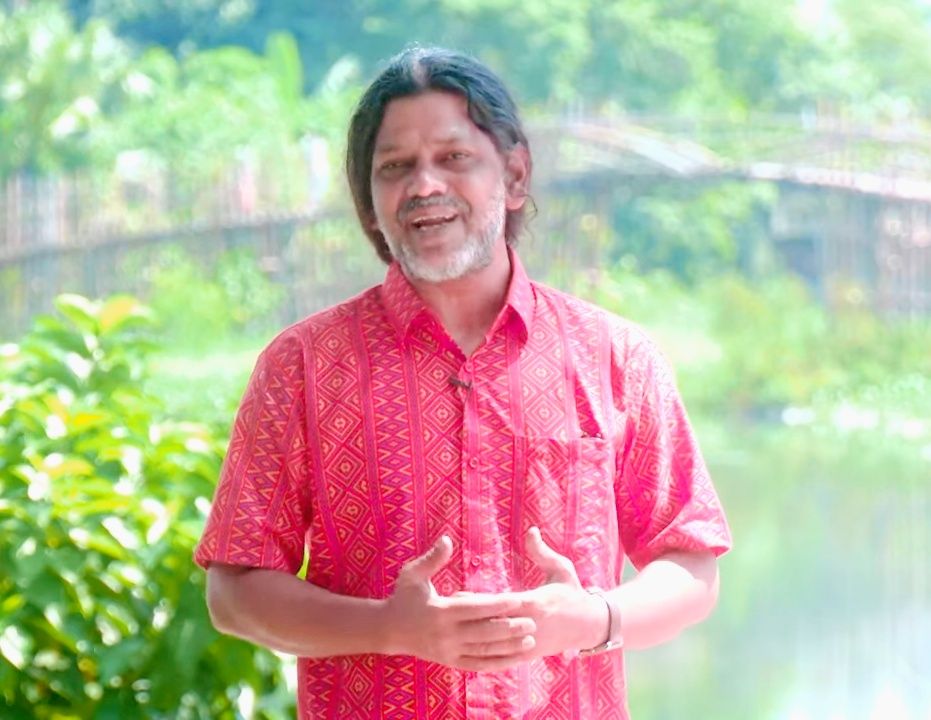
Muntasir Rabby
Recently, many shops and supermarkets across the country — including Aarong — have begun encouraging customers to buy reusable cloth bags as an eco-friendly alternative. The initiative aims to reduce the use of both paper and plastic bags.
Many shoppers appreciate the move, but others remain uncomfortable because reusable bags are not yet part of their habit. Just two days ago, I came across a Facebook video in which a man (identifying himself as a Supreme Court lawyer) complained that after purchasing goods worth 5,000 taka from an Aarong outlet, the store did not provide him with a bag.
He sounded genuinely disappointed. Even after spending 5,000 taka, he received no bag to carry his purchases. Perhaps he would have been pleased had they given him a plastic bag, but he likely would not have understood — or even considered — the environmental cost of that convenience. Like this man, nearly 80 percent of people in Bangladesh are accustomed to shopping with single-use plastic bags.
Aarong’s justification for promoting reusable bags is rooted in environmental facts: the wood from a fully grown tree produces only about 400 paper bags, and each paper bag requires around five liters of water to manufacture. Globally, more than two billion trees are cut down every year solely for paper packaging — a striking statistic that highlights the urgency of eco-friendly alternatives. Aarong’s initiative stems directly from this concern.
There is no doubt that the effort is commendable. The real question, however, is how quickly people will adapt to reusable bags. Many of us are used to carrying cloth bags for vegetables or groceries, but for general shopping this practice remains unfamiliar. Apart from Aarong, most shops and malls continue to use paper bags or single-use plastic bags.
What is a reusable bag?
A reusable bag is typically a cloth bag designed for repeated use. Yet many shoppers still prefer single-use plastic bags. People often forget to bring a reusable bag from home, and many find carrying one inconvenient. As a result, single-use plastic bags feel more practical. But plastic bags — usually made of polypropylene — can take anywhere from 20 to 500 years to decompose, depending on conditions. They reduce soil fertility, and burning them causes air pollution. Above all, their environmental harm is well-known.
What does the law say?
To protect the environment, we must change our dependence on polythene. The problem, however, lies in the easy availability of single-use plastic bags. Bangladesh was one of the first countries in the world to ban polythene bags, through the Environment Conservation (Amendment) Act, 2002. Unfortunately, 23 years later, the production, marketing, transport, and use of polythene continue largely unchecked. Section 6A of the Environment Conservation Act, 1995 prohibits the manufacture, sale, distribution, and commercial use of polythene shopping bags, including those made from polythene, polyethylene, polypropylene, or their mixtures. Section 15 prescribes penalties, which may include fines, imprisonment, or both, depending on the severity and repetition of the offence. These relatively light penalties contribute to the persistence of polythene usage. In many cases, people simply find polythene easy and convenient to use.
It is time for the government to make the use of reusable bags mandatory in all retail outlets, as Aarong has done. As a nation, we are not yet environmentally conscious enough to reduce single-use plastics solely through voluntary awareness campaigns. Awareness alone is not sufficient; enforcement must complement it.
Awareness or compulsion — which works better?
Under the Environment Conservation (Amendment) Act, 2002, the government can issue a notification mandating the use of reusable bags in all retail shops, and it can ensure compliance through regular monitoring. The Ministry of Environment can incorporate this monitoring into its routine work. Many laws in Bangladesh fail to achieve their intended outcomes simply due to inadequate monitoring. With proper oversight, this policy could succeed.
Another important issue is the fate of the many people whose livelihoods depend on manufacturing single-use plastic bags. A large workforce is involved in this industry. They must be rehabilitated. Workers can be trained to make reusable bags and become skilled artisans. Such training will assist factory owners transitioning away from plastic production. The government can support them with financial assistance, simplified procedures for setting up new units, and concessional loans where appropriate. However, consistent follow-up, transparency, and accountability are essential.
Thus far, this discussion has focused on production — but how do we help customers build the habit of using reusable bags? Currently, Aarong charges customers for reusable bags, and the price can be high enough to discourage many. Some may ask why retailers should bear this cost. The answer lies in environmental responsibility: businesses cannot profit from the environment while simultaneously harming it. Retailers must be willing to subsidize reusable bags initially to help consumers adopt the habit.
Who bears the greater responsibility?
The culture of reusable bags cannot take hold solely through retailer subsidies. Consumers must also act responsibly. Out of concern for the environment and a commitment to ensuring a livable planet for future generations, people must begin using reusable bags willingly and incorporate them into their daily habits.
Ultimately, three parties must actively work together for this initiative to succeed: retail and business owners, the state, and consumers. Only through collective action can we eliminate single-use plastic bags in Bangladesh and gift future generations a country that remains safe, healthy, and livable.
[Muntasir Rabby is a fourth-year Bachelor of Laws student at Bangladesh University and has been engaged in citizen journalism for many years.]