Staff Correspondent - Jackfruit Post
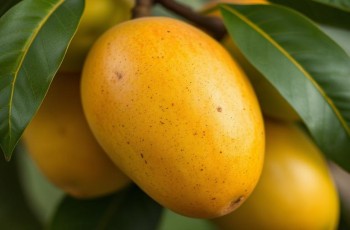
Gourmati mangoes, a late-season variety prized for their low fiber, pleasant aroma and high sweetness, are now in peak season, according to mango researcher Mahbub Siddiki.
While Bangladesh’s mango season is usually considered to last from mid-May to mid-August, Gourmati appears later, typically from the third week of August until mid-September.
Siddiki, who has questioned the accuracy of the government’s official mango calendar, has published his own version on Facebook. He notes that Gopalbhog ripens from May 28 to June 10, Khirshapati from June 10 to June 30, while other varieties follow.
In a post on August 24, he said the ideal time to buy Gourmati begins after August 15.
“Many buyers were misled into purchasing Gourmati in July, when it was still sour,” Siddiki wrote.
“The real Gourmati now in the market is unmatched in taste and fragrance. Wait until it is fully ripe and soft before cutting.”
He added that the variety would not be available after September 10.
Yield and Features
Agriculturists report that Gourmati has a higher edible portion—93 percent—compared with 80–82 percent for most premium mangoes. Its stone and skin are thin, and the fruit is more disease-resistant than other varieties. Once harvested, ripe Gourmati can remain fresh for seven to 10 days.
Each bigha of land yields around 70–100 maunds of Gourmati, compared with 50–60 maunds for Amrapali, Langra, Khirsha and Himsagor. A 20-year-old tree can produce 8–10 maunds annually.
Origin
The variety was first identified in 2013 in Shibganj upazila of Chapainawabganj. Agriculturists say it developed naturally as a mutation of Langra and Ashwina mangoes. The tree was discovered in Shialmara, a border village of Shibganj.
The name 'Gourmati' was first given by Manjurul Haque, then Additional Director of the Department of Agricultural Extension. The Bangladesh Agricultural Research Institute later released the variety as BARI Mango-12.
Price and Availability
According to Siddiki, Gourmati is currently selling for Tk 150–200 per kilogram in Rajshahi’s Rail Station Bazar, Shaheb Bazar, Horogram Court Bazar, Kazla, Binodpur and Shalbagan markets. In Dhaka, the price is around Tk 250 per kilogram.