Researcher F.M. Anwar Hossain stated that renewable energy and responsibility toward rivers are key to achieving a just energy transition.
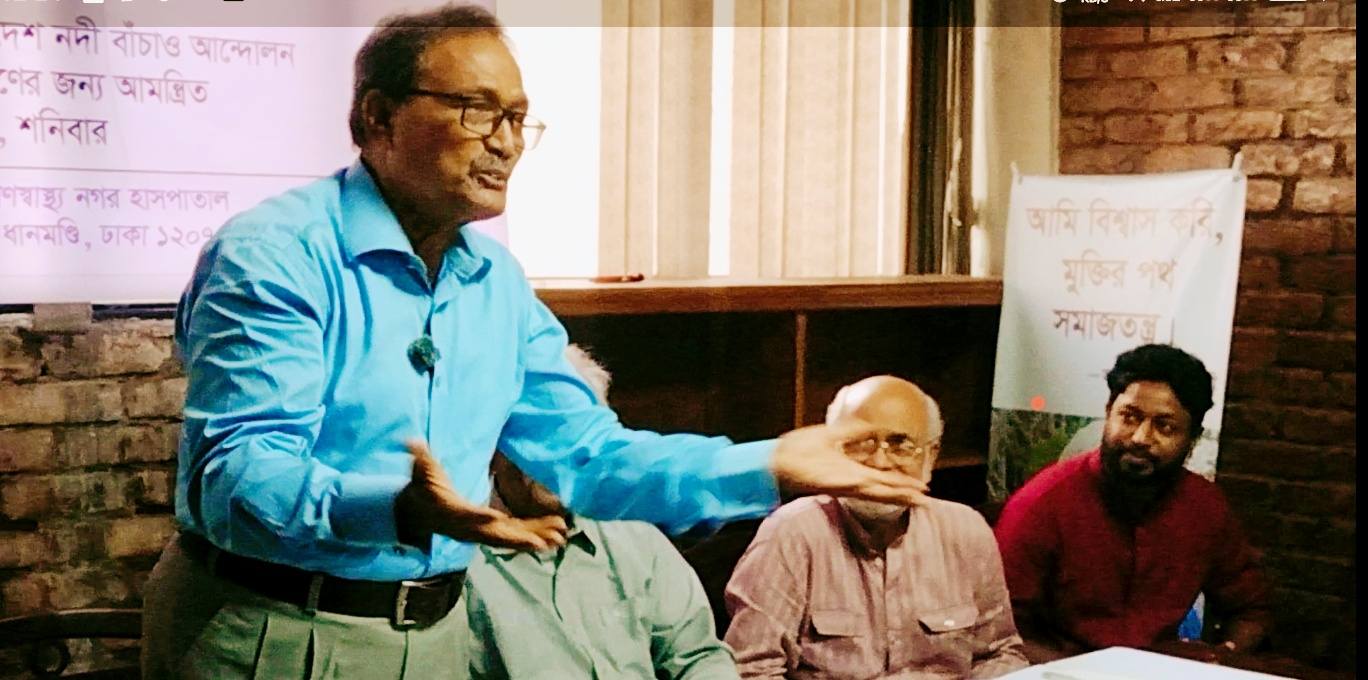
On September 5, Riverine People organized a discussion titled 'Renewable Energy and Rivers: Advancing Just Energy Transition Through Riverine Stewardship in Bangladesh' at their office on the bank of the Buriganga River.
The event was co-hosted by Jackfruit Post.
The discussion was attended by Riverine People’s trustees, directors, river and environmental activists, and researchers.
The keynote speaker, Riverine People trustee F.M. Anwar Hossain, said, “Currently, over 80 percent of the country’s electricity is generated from coal and gas – meaning it is heavily dependent on fossil fuels.
"This reliance increases the risks of floods, cyclones, and sea-level rise while also contributing to environmental pollution."
“Shifting to renewable energy is not only about protecting the environment, it’s a matter of survival and justice – especially for river-based communities who have been safeguarding these rivers for generations,” he emphasized.
The researcher also presented several technological alternatives during the discussion.
According to Riverine People, appropriate technologies for river areas include rooftop and riverside solar panels, solar installations on ponds or dams, flow-based river turbines, tidal energy, electric boats, aquatic biomass, and hydro-solar hybrid systems.
Anwar Hossain believes that combining river conservation with renewable energy initiatives can significantly reduce environmental impact, forming a path toward a Just Energy Transition (JET).
“Involving local communities can help address the weaknesses of this approach,” he added.
Riverine People also announced that more such discussions will be held in the future to raise awareness on the issue.